
Assessing Your Personal Safety Requirements
Evaluating Your Daily Routine and High-Risk Scenarios
A single late-night stop at a fuel station can rewrite your family’s history. The habitual nature of your daily commute is the primary variable in your vulnerability. I study the topography of my own movements, the exact corner where the streetlights fail, the choke point where traffic slows to a crawl. Your routine is a fixed template of predictable exposure!
- Being stationary at a red light after midnight.
- Walking from a mall entrance to the furthest parking row.
- Entering a gated complex with a delayed closing mechanism.
This assessment demands rigorous honesty about your actual habits. The decision to carry specific self defence gear should stem from these real-world checkpoints, not from abstract fear. Self defence gear left in a handbag is useless if that handbag stays in the boot. Match the equipment to the exact physical moments that expose you.
Understanding Local Laws Regarding Protection Tools
The law is silent until you violate it. In South Africa, the Firearms Control Act governs firearms, while the Dangerous Weapons Act addresses less lethal options. Your self defence gear must comply with both statutes, or you forfeit your legal standing the moment you need it most.
Assessing your personal safety requirements involves an honest conversation about your physical limitations. A stun gun demands proximity. A pepper spray requires wind awareness. The gear you select should align with your ability to deploy it under pressure.
- Legal classification of each tool
- Your practical proficiency with it
- Storage that supports rapid access
Identifying Vulnerable Areas and Times
Count the minutes you spend exposed. The empty parking bay beneath your office, the footpath that runs beside the railway line, the lift lobby that holds no other soul. These are your vulnerable areas, and they change with the clock. A midday route may feel benign; the same route at 5:45 in the darkening winter afternoon carries a different weight.
Your self defence gear must be chosen against these specific hours, not against vague fears. A heavy torch may suit the late night walk to your car. A tactical pen disappears into a jacket pocket for the evening commute. I have stood in these quiet spaces myself, and I know how quickly the ordinary turns uneasy. The darkness does not announce itself. It settles gradually, and if you have not considered the time when you are most alone, your self defence gear remains a prop instead of a shield.
The Role of Situational Awareness in Personal Security
Your personal safety requirements are not a fixed list. They shift with your health, your living arrangements, your profession, and the people who depend on you. A security consultant in Johannesburg faces different exposures than a night shift nurse in Durban. I re-examine my own requirements after every major change, because what protected me in January may fail me in July.
Situational awareness is the practice of noticing the pace of a street, the posture of a stranger, the sudden silence of a neighbourhood. Your self defence gear remains inert until your observation tells you when to act.
Consider these factors when assessing your requirements:
- Your baseline physical condition and training
- The response time of local emergency services
- The reliability of your transport and communication
Each one changes the kind of self defence gear you carry, and how you carry it.
Popular Non-Lethal Defense Tools
Pepper Spray and Gel Formulations
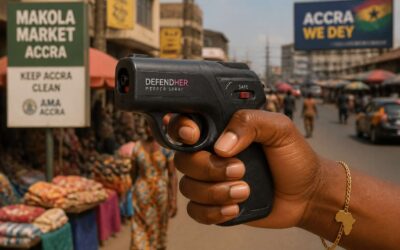
A single blast of oleoresin capsicum can incapacitate an aggressor in seconds, yet the formulation you carry changes everything. Pepper spray emits a chaotic fog, effective in open areas but vulnerable to wind shifts, especially along the coastal regions of South Africa where a stiff southeaster can redirect the cloud straight into your face.
Gel formulations solve that problem. They fire a viscous stream that adheres to skin and clothing, holding the irritant in place rather than letting it evaporate. This makes gel a wiser selection for indoor settings, crowded sidewalks, or anywhere bystanders linger.
- Blowback risk: spray carries higher blowback in a breeze.
- Stream accuracy: gel performs better at range.
- Decontamination: gel demands more effort to wash off.
Both options belong in a serious self defence gear setup, but matching the delivery system to your environment matters as much as the pepper inside the canister.
Stun Guns and Tasers: Differences and Effectiveness
Contact crime statistics in South Africa remain stubbornly high, prompting civilians to explore every defensive option. The stun gun and the Taser are frequently lumped together, yet they operate on entirely different principles. A stun gun must be pressed against the attacker’s body, delivering a painful shock that usually ends the encounter but places you within grabbing distance. A Taser fires two barbed probes from several metres away, causing involuntary muscle contraction through neuromuscular incapacitation.
Your choice within the broader category of self defence gear should account for your physical size, your environment, and the reality that these tools require practice.
- Stun guns: compact, reliable, but only effective at contact range.
- Tasers: standoff capability, but limited to one or two shots.
Effectiveness depends on how the tool matches your situation, not on marketing claims.
Tactical Pens for Everyday Carry
The most unassuming items often make the finest defensive tools. A tactical pen is a writing instrument first, and a personal protection device second, which is precisely why it succeeds. It sits on your desk, in your pocket, or clipped to your shirt, drawing no attention until it is needed. In South Africa, where firearm regulations are strict and carrying a blade invites legal scrutiny, this dual purpose offers a practical advantage.
Construction determines value. A genuine tactical pen is machined from aircraft grade aluminium or hardened steel, with a pointed, reinforced tip that concentrates force into a small area. It is not a weapon of sweeping gestures. It is a tool for precise, painful strikes to vulnerable spots like the eyes, throat, or joints, allowing you to break a grip or create space to flee. Its function relies on your ability to act quickly, not on batteries or a safety switch.
Consider what matters most when you shop for self defence gear of this kind:
– A capped design that covers the strike tip for safe pocket carry.
– A knurled grip that stays secure in a sweaty palm.
– A durable clip that can catch on a belt loop or jacket pocket.
– A construction that resists bending when pressure is applied.
– A form factor that feels natural when you write with it for hours.
The pen should not add bulk to your routine. It lives in the same places you already keep your car keys and your phone. When a threat appears, you do not need to reach for a separate holster or bag. You simply tighten your grip on the object you already hold. That immediacy matters because attacks happen without warning.
Tactical pens also sidestep the question of escalation. A stun gun announces its presence with an electric crack. Pepper spray carries a distinct canister profile. The pen looks like any other office supply. This makes it easier to carry into environments where other self defence gear might raise questions or require explanation. It offers a level of discretion that few protective tools can match.
Personal Safety Keychains and Kubotans
Personal safety keychains and kubotans are common self defence gear in South Africa. A keychain with a pointed tip can deliver a sharp strike to a grabber’s wrist. Many models look like decorative objects, yet their reinforced edges are designed for focused pressure. A kubotan is a solid rod, often textured for grip. It extends beyond side of the fist, turning a punch into a more concentrated strike. These tools produce pain without cutting skin and do not rely on batteries.
Because they attach to your keys, you do not need to remember a separate pouch or compartment. Some versions include a whistle or small LED light.
These variations allow you to choose tools based on hand size grip strength. You must practice retrieving and holding them securely. Otherwise, even the best self defence gear remains only a keychain.
Expandable Batons: Portability vs. Legality
Collapsible steel batons present a paradox. They fold into a palm sized cylinder, yet extend into a full defensive reach. A Johannesburg commuter can slip one into a backpack without drawing a second glance. The legality, however, demands careful thought.
The Dangerous Weapons Act does not name expandable batons explicitly. Police retain discretion, and possession becomes questionable when officers presume intent to harm. This makes batons a curious entry in the self defence gear market.
Consider the portability benefits:
– Fits in a glove box or laptop bag
– Extends rapidly with wrist action
– Provides standoff distance against multiple threats
For every advantage, a corresponding legal risk exists. Your suburban routine might tolerate this self defence gear, while a night shift in a high-risk area changes the calculation entirely.
Alert Systems and Deterrent Devices
Whistles and Sound-Based Deterrents
A whistle won’t stop a blade, but it will ruin a mugger’s quiet time. That’s the appeal of sound based deterrents. They trade physical force for sheer inconvenience. A piercing blast from a quality pea whistle can disorient an attacker and alert neighbours who suddenly remember they have ears.
Most protection tools focus on impact or voltage. Sound devices exploit the human flinch response. A 100 decibel burst at close range buys you two critical seconds. Those seconds matter more than any karate chop.
- It alerts a wider radius of people than a shout.
- It breaks an attacker’s focus.
- It marks your location for security personnel.
In South Africa, load shedding kills door intercoms and street lighting. A rechargeable electronic alarm or a sturdy metal whistle stays operational. That reliability earns sound tools a place in your self defence gear rotation.
Smartphone Safety Apps and GPS Trackers
Three in the morning in Johannesburg, a car backfires and every dog in the suburb answers. Your phone stays silent. That silence is the vulnerability. Alert systems and deterrent devices belong in your self defence gear rotation. Smartphone safety apps let a trusted contact watch your journey in real time. GPS trackers, some small enough to hide in a jacket lining, broadcast your coordinates if you fail to check in.
- Continuous location sharing with a designated contact
- Panic activation that alerts emergency services
- Battery efficient modes for load shedding periods
South Africa’s frequent power cuts make battery life the deciding factor. A fully charged phone with a safety app remains a persistent witness. These tools do not block a blade, they deny an attacker the comfort of being forgotten.
Everyday Carry Essentials for Preparedness
Choosing a Reliable Tactical Flashlight
In South Africa, load shedding turns routine evenings into unpredictable terrain. A tactical flashlight is not a luxury; it is a cornerstone of self defence gear. I have tested dozens, and the difference lies in the details.
Look for a strobe function, an aluminium body, and a tail switch. These features give you control when your heart rate spikes. Buttons you can find in the dark are non-negotiable!
– Brightness above 800 lumens
– Beam throw of at least 200 meters
– Rechargeable battery with USB-C port
Your choice must survive drops and water exposure. A reliable tactical flashlight lets you see threats before they see you, which is essential for reaction time.
Pocket Knives: Fixed vs. Folding Options
With a light in hand, the next layer of preparedness relies on a blade. Fixed blade knives offer immediate deployment and a solid grip because the tang runs through the handle. Folding knives, however, fit more naturally in a pocket and attract less attention before a threat develops.
When selecting self defence gear for everyday carry, weigh these factors:
- Blade steel quality and edge retention
- Lock mechanism strength for folders
- Sheath retention for fixed blades
- One-handed opening and closing speed
That set of considerations addresses the practical differences. A folding knife with a strong liner lock or button lock serves both utility and protective functions, while a fixed blade remains a dedicated defensive tool. The right platform shifts with urban density, everyday clothing, and relevant legal limits.
Multi-Tools That Provide Utility and Defense
Consider the multi-tool. It’s the overachiever in your pocket, the one item that makes you look prepared without appearing to attend tactical training camps. In South Africa, where load shedding complicates everyday chores, a decent multi-tool means you can fix a loose gate hinge or open a stuck window. The pliers grip hard, the screwdriver bits reach where fingers can’t, and the blade, while no dedicated weapon, provides a cutting option when needed. As an item of self defence gear, it warrants respect for sheer versatility.
You might want a model with a few key functions:
- Pliers with integrated wire cutter
- A locking knife blade
- A bottle opener, because priorities
Pair this with the rest of your self defence gear and you handle more situations than a full drawer of single-purpose tools, whether the problem is a stripped screw or something more physical.
Wearable Defense Accessories and Apparel
South Africa’s sun is unforgiving, and the daily commute often blurs the line between routine and risk. Everyday carry clothing has evolved beyond simple fashion. It now serves as a foundation for your self defence gear. Consider a lightweight UV-weave shirt with reinforced stitching. It offers sun protection, but the dense fabric also resists grabbing. A pair of cargo trousers with silent closures, like magnetic snaps or velcro patches, provides secure storage. No jangling keys, no bulging pockets that broadcast your setup.
The apparel you choose can act as a delivery system. A sturdy belt becomes a retention tool. A waxed cotton cap shields your vision from glare, keeping your eyes free to scan the environment. Here is the thing, the fabric itself is the first layer of your preparation. It should move with you, not restrict you. And it should look like normal clothes, not tactical gear. This principle of blending in is crucial. Wearing overt security uniforms in a civilian setting often draws the wrong kind of attention.
Your personal carry system should integrate with the clothing. Pockets need to be accessible, but not flapping open. A zippered chest pocket is ideal for a compact power bank. The hidden waistband pouch is perfect for a small canister of pepper gel.
– A covert carry vest with breathable mesh lining
– A neck pouch for your ID and emergency cash
– A pair of impact-resistant sunglasses with polycarbonate lenses
These items do not scream for attention. They perform their duty in silence. The right jacket offers a shield against wind and water, but also breaks the silhouette of your body, making you a harder target to assess. The true value lies in the combination. When your apparel and accessories work together, your entire presence becomes part of your self defence gear strategy. Preparation does not need to be heavy. It can be woven into the very threads you wear each day.
The Pros and Cons of Carrying a Firearm
Packing a pistol onto your hips is a commitment, not a fashion choice. It alters how you move, how you react, and how you greet strangers. In South Africa, the firearm debate sits at the heart of any discussion about self defence gear. The upside is clear. You gain immediate force, a deterrent effect, and autonomy when help is minutes away. The downside is heavier. Licensing takes months, safes cost money, and every confrontation risks escalation. A weapon can be wrestled away. It demands constant training.
Everyday carry essentials should smooth your path, not complicate it. A tourniquet, a small light, and a multi-tool cover common emergencies.
- Firearms: unmatched stopping power
- Firearms: legal paperwork and liability
- Non-lethal gear: easier to manage, less final
Your choice depends on discipline and tolerance for risk. The best self defence gear remains the one you carry daily, without hesitation.
Non-Obvious Defensive Items for Professional Settings
Most professionals never stop to consider that their daily accessories can double as defensive tools. A solid stainless steel water bottle carries enough heft to create distance in a crowded lift. A reinforced leather belt offers control without raising suspicion. These objects blend into the office environment while remaining genuinely useful.
Consider what passes through a professional setting without a second glance:
- A heavy umbrella with a curved handle
- A hardened steel travel mug
- A dense, full-grain leather document folder
I prefer items that serve a primary purpose first. Security through obscurity works because nobody registers that umbrella as anything but a rain guard. In Johannesburg or Cape Town, that invisibility matters more than an obvious arsenal. The best self defence gear for a professional setting stays quiet yet accessible.
Training and Responsible Usage
Taking Self-Defense Classes for Effective Response
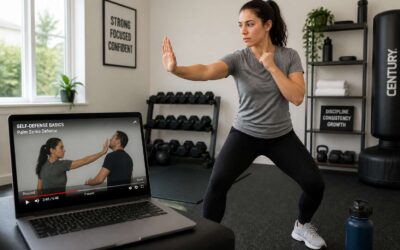
The most effective self defence gear is the knowledge of how to use it. In South Africa, where response times are measured in minutes, not seconds, training is what separates carrying a tool from deploying it. A reputable course conditions your instincts so you do not hesitate when it counts.
Good instruction refines judgement. You learn when to draw and, more importantly, when to keep your hands visible. I have watched people fumble because they never practised a draw from a jacket pocket. Instructors understand local realities: opportunistic muggings, load shedding darkness, and the legal scrutiny that follows any defensive act.
A syllabus covers:
- Threat recognition and distance management
- Deploying your self defence gear while moving or on uneven ground
- What to say to police after an incident
That final element is part of responsible usage. Many owners know how to strike but not how to explain. Training addresses both.
Legal Use of Force and De-escalation Techniques
In South Africa, the law judges your actions after the adrenaline fades, not during the moment. This harsh lens makes responsible usage a core skill. Your self defence gear requires a mind that understands when force ceases to be justified.
De-escalation is the first line of defense. A calm voice and a steady hand often achieve what no tool can. Legal use of force follows a simple hierarchy: retreat if possible, then match the threat with proportional response.
- Assess the attacker’s intent and weapon.
- Choose the least forceful option that ensures safety.
- Stop the moment the threat ends.
I have seen honest citizens lose their cases because they could not explain their split-second logic. Carrying any defensive tool means accepting that burden. Train for that explanation before you ever need it!
Maintaining and Replacing Equipment
Training transforms self defence gear from a pocket ornament into a reflex. I have watched people fumble a pepper spray canister during a drill, their thumbs searching for the actuator while a padded attacker closed the distance. Muscle memory requires repetition. Dry fire the mechanics. Practice drawing from the pocket you actually use.
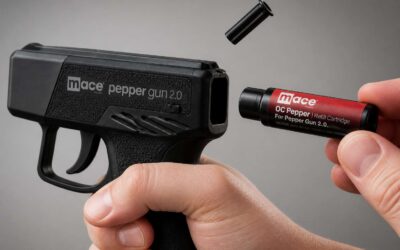
Equipment degrades. Heat, dust, and the humidity of a South African summer corrode springs and weaken propellants. Inspect your gear monthly. Check seals, test lights, and confirm batons lock firmly.
- Replace expired pepper spray every twelve months.
- Recharge or swap batteries in tactical flashlights and stun guns.
- Retire any blade with chips or a loose pivot.
Keeping a maintenance log builds discipline. Your self defence gear is only as reliable as your last inspection.
Storage, Maintenance, and Accessibility
Secure Yet Accessible Home Storage Solutions
Statistically, the average South African home contains enough sharp objects to arm a small militia, yet most of us still stash our actual self defence gear in a drawer next to the expired paracetamol. This is a recipe for disaster, and not the kind you can blame on load shedding. Your tactical flashlight is useless if it’s buried under a mountain of old phone chargers. The first step to fixing this chaos is acknowledging that a “hiding spot” is not a “storage solution.” We are aiming for a system that a sleep-deprived person could navigate in the dark, with zero fuss.
The easiest way to achieve this is through a centralised safe or a locked cabinet near your bed. A small, fingerprint-activated safe bolted to the floor or nightstand is ideal. It prevents curious children from finding your defensive tools while allowing you instant access. However, do not neglect the environment. South Africa’s humidity, especially in coastal regions like Durban, is a silent killer of metal components. Always include a silica gel packet or a small dehumidifier bar inside the safe. This prevents rust from seizing the mechanisms of your favourite gear.
Maintenance is the unglamorous sibling of storage, but it is equally vital. Your equipment only works if it is functional. Neglecting basic care means you might discover a seized-up kubotan or a canister of pepper spray that lost its pressure months ago. We recommend setting a recurring calendar reminder, perhaps aligned with the first day of each month, to conduct a quick inspection. This habit is the difference between owning gear and trusting gear.
– Wipe down metal tools with a silicone cloth to repel moisture.
– Test the safety mechanisms on your tactical pens and knives.
– Shake your pepper spray canister gently to ensure the propellant is still mixed.
– Check the batteries in your flashlight and GPS trackers.
When it comes to accessibility, the goal is speed and discretion. A locked safe in the bedroom is excellent for nighttime incidents, but what about during the day? If you are in the lounge, your gear should be within reach without being visible to guests. Consider a discreet, false-front bookcase safe or a magnetic lockbox attached to the underside of a solid wooden coffee table. The real trick is to avoid storing your primary self defence gear in a place that requires you to move across the house to retrieve it. The best system integrates storage into your daily flow, ensuring your tools are always within arm’s reach, whether you are watching TV or sleeping. This effortlessly balances safety with the necessity of a secure household.
Configuring Car Mounts and Pouches
The car is an extension of your daily perimeter, a steel bubble that is often the most dangerous environment you occupy. A defender’s kit in the boot is useless when a threat unfolds at a traffic light. The objective is to configure your vehicle so that your self defence gear is neither visible to prying eyes nor buried beneath gym bags and shopping parcels. Consider the driver’s side door pocket, where a tactical flashlight or a compact kubotan can rest without drawing attention. Under the seat, a hard-sided pouch attached with Velcro straps provides a stable home for a folding knife, yet remains reachable during a struggle.
The boot requires a different philosophy. That investment in self defence gear should be protected against the ravages of temperature fluctuations, which degrade aerosol propellants and battery life. Store non-permanent items in a lined tool case, secured to the cargo area’s anchor points. This prevents the gear from becoming a projectile during sudden braking. Finally, maintenance schedules must include the vehicle. Leaving a weapon in a hot Johannesburg car for a week can warp polymer components and dry the lubricants on metal springs. A quick monthly check of your vehicle’s kit keeps it ready for the disorder of a fleeing or confrontation scenario. The car is a transit zone, not a fortress, so the storage hierarchy always begins back home.
On-Body Carry Options for Different Lifestyles
Your self defence gear only works if it survives daily wear. I have seen pocket clips snap and holster straps fatigue from neglect. Maintenance is not a chore, it is a ritual. Check your gear every Sunday. Wipe down metal parts, test retention, replace worn components. For on-body carry, the lifestyle dictates the method. A courier might prefer a shoulder rig under a jacket, while a teacher needs a discreet ankle holster. Consider these options:
- Belt carry with a kydex sheath for quick access
- Pocket carry using a dedicated holster to prevent printing
- Neck carry for small tools like kubotans
Storage at home still matters. Rotate your self defence gear to avoid pressure points on fabrics. A leather holster needs rest, so alternate between two. The goal is seamless accessibility without sacrificing comfort. Your body carries this gear, so treat it with consistent care.
0 Comments