
Understanding Spray Defense Projection
How Far Can Defense Sprays Actually Reach
The average attacker closes a distance of 21 feet in under two seconds. That sobering fact explains why many South Africans question the effective reach of their defensive tools. For a pepper spray gun range, the projection depends on the formulation and the device. Stream sprays typically carry 3 to 4 meters, while foggers drift shorter, around 1.5 meters. A gel can reach 4.5 meters, but it leaves a trail that a determined assailant might follow.
Understanding this projection matters more than raw distance. Your pepper spray gun range is a buffer, not a barrier. Consider the variables:
- Wind speed can bend the stream or blow fog back into your face.
- The attacker’s movement alters your aim.
- Your own adrenaline shortens your effective decision time.
The gap between a manufacturer’s claim and real-world performance often surprises owners who never test their canister.
Stream vs. Fog vs. Gel: Distance Differences
Most of us assume distance is a fixed number printed on the canister. The nozzle determines everything. A stream leaves a narrow channel of liquid and travels straight until gravity pulls it down. A fogger atomises the formula into particles that lose momentum immediately. Gel cuts through light wind better than mist. Its shape creates drag leaving the nozzle.
The pepper spray gun range you get depends on the carrier, not the capsaicin. Alcohol based carriers are lighter and evaporate faster. Water based formulas hold together longer in the air but perform poorly in cold weather. Thickening agents can stretch the effective pepper spray gun range, though they also make the spray easier to dodge.
Consider these variables:
- Nozzle pressure drops as the canister empties.
- Grip strength changes how much force the actuator receives.
- Temperature shifts the viscosity of the liquid inside.
These factors split the labelled range from reality.
Effective Range vs. Maximum Range Explained
A label that promises a certain number of meters is a best-case scenario measured on a windless day against a stationary target. That figure is the maximum pepper spray gun range, a theoretical distance representing the absolute physical limit of the liquid’s travel. It is a physics test, not a practical one. So when you are standing on a dusty farm road with a threat advancing, you must understand the difference between what the canister can do and what it will actually do.
The effective range is a far more sobering number. It is the distance at which the spray maintains enough concentration and velocity to reliably hit a target’s eyes and nose without the wind scattering it. Wind is a constant companion in rural South Africa, and a two-meter gap with a light breeze can turn a fine mist into a useless cloud drifting over the veld. The carrier, the nozzle, and even the angle of your wrist all dictate this working distance.
Several factors shrink that gap between the maximum and effective reach:
– The oleoresin capsicum solution’s viscosity changes with the afternoon heat.
– A wind gust that affects a gel less than a stream.
– The psychological stress of a confrontation that makes you aim high.
– A partial blockage in the nozzle from dust or dried residue.
For any person defending a homestead, the effective pepper spray gun range is the only number that matters. Practice at that distance, not the one on the box.
Reading Manufacturer Specifications Accurately
The spec sheet never mentions the wind. That omission is the single most important thing to understand about reading manufacturer specifications accurately. The printed pepper spray gun range comes from a static test in a sealed room. There is no dust, no adrenaline, and no afternoon breeze. Your world has all three.
To read the numbers correctly, you must identify what the test conditions omit.
– The distance at which the stream turns into a drifting mist.
– The pressure loss after a few seconds of discharge.
– The viscosity shift when the canister bakes in a hot car.
That printed figure is a ceiling, not a promise. Your practical pepper spray gun range will always sit below it. Accept that gap, and you’ll measure your distances by the situation, not the packaging.
Factors That Influence Spray Reach
Canister Pressure and Nozzle Design
The distance a defense spray travels is not a fixed number. It changes with every canister you pick up. Two forces dominate this variation: the pressure inside the canister and the shape of the nozzle.
Canister pressure acts like a launch system. A freshly filled canister pushes the liquid out with more force, extending the pepper spray gun range. As you use the canister, pressure drops. The stream weakens and starts to arc downward earlier.
Nozzle design controls the liquid’s behavior after it leaves the opening. A precision-cut nozzle creates a narrow, cohesive stream that cuts through wind. A wider opening breaks the liquid into droplets, which lose speed quickly. These choices explain why two canisters with the same chemical formula perform differently.
Wind, Rain, and Temperature Effects
Wind is the biggest variable. A headwind stops the spray short; a crosswind pushes it sideways. In Cape Town’s coastal gusts, a stream that reaches 3 meters in calm air might barely cover 1.5. Rain weighs down the droplets, pulling the chemical groundward before it reaches the target. Temperature shifts the liquid’s behaviour, and all three factors redefine the practical pepper spray gun range.
Hot days thin the mixture, causing a wider, slower fan. Cold days thicken it into a lethargic globule that falls early. Both conditions shrink the pepper spray gun range.
Consider the environment before you measure distance:
- Urban alleys create unpredictable wind tunnels.
- Humidity after rain changes droplet cohesion.
- Direct sunlight on a canister raises internal heat.
User Technique and Grip Stability
The human factor is the final variable in pepper spray gun range. Nozzle specs and weather conditions mean nothing if your hand shakes at the critical moment.
Hold the canister with a straight, deliberate index finger on the actuator. A jerky pull rotates the nozzle and throws the stream into a skewed arc. I have watched trainees in our Cape Town sessions reduce a 3 meter claim to a wet stain at their feet because their thumb rode the canister top, forcing the orifice downward.
Stability begins below the wrist. Brace your shooting hand with your off hand, forming a two palm platform. That single change extends reach more than any canister upgrade.
- Thumb wrapping over the top, tilting the nozzle down
- A claw like curl that squeezes the canister itself, not the actuator
- Firing while moving, turning a stable stance into a stagger
Comparing Range Across Different Spray Types
Compact Keychain Sprays for Close Quarters
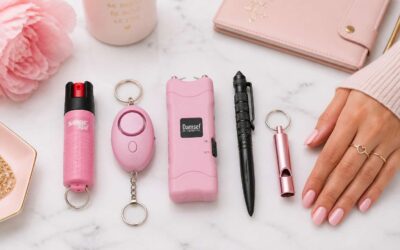
A keychain spray is not a sniper’s tool. It is a close quarters instrument. When comparing pepper spray gun range across compact formats, you will find that these small canisters trade distance for immediate access. Most keychain models project a short burst that reaches only two or three meters, which feels tight until you remember the attacker is already inside your personal space.
That shorter reach is not a flaw. It is a deliberate design choice for urban environments like Johannesburg or Cape Town, where a confrontation happens fast and close. The compact body limits the propellant volume, so the spray leaves the nozzle with less force. You get a controlled cloud rather than a long stream. For a quick draw from your pocket or bag, this trade-off works.
- Keychain foggers: shortest range, best for creating a wide barrier
- Keychain streams: slightly longer reach, easier to aim under stress
- Keychain gels: stick to the face, but require you to be almost touching
I have tested a few of these on a practice target. The pepper spray gun range on a keychain unit never matches a full sized canister. Yet for a person walking to their car at night, the priority is not distance. It is the ability to deploy in one second. That close range capability is what makes these sprays a sensible everyday companion.
Full-Size Canisters and Standoff Distance
In defensive spray incidents, a gap of three meters halves the chance of a grab. I have held a full-size canister during a practice drill, and the pepper spray gun range immediately felt different. That reach creates a standoff distance you cannot achieve with a compact unit.
That buffer is practical. It gives you time to raise a hand, shift your weight, or scan for an exit without the attacker closing the gap. In a driveway in Pretoria, that advantage is tangible.
The practical range changes how you choose the tool:
- An open parking lot favors a stream to maintain distance.
- A narrow walkway calls for a fog that fills the space.
- A car window demands a gel that holds its shape.
For me, the pepper spray gun range on a full-size unit is the anchor of a personal safety plan. The value lies in the standoff it provides, holding the line where you stand.
Professional-Grade Sprays for Extended Reach
Professional grade sprays extend the pepper spray gun range beyond what consumer units offer. A security operator in Johannesburg can engage a threat at five meters with a duty-grade stream, while a standard civilian canister often falls short of three. The difference comes from pressurised canisters and precision nozzles engineered for sustained output. When I tested a professional fog unit, the cloud travelled four meters before dispersing, enough to cover a corridor. These tools demand practice, but they reward the user with a genuine standoff distance. For a professional, the choice is direct:
– Duty stream for outdoor perimeters
– Fog for indoor containment
– Gel for targeted application at range
Each type changes the pepper spray gun range you can rely on.
Inert Practice Units for Safe Distance Testing
Inert practice units strip away the variables that distort judgement. They deliver the same pressure and nozzle behaviour as a live canister, so you can measure the actual pepper spray gun range in a controlled space. A measured distance marker on the ground gives honest feedback, not guesswork. Watching the liquid arc, drift, or pool changes how you understand the weapon.
- Stream: observe where the column loses cohesion
- Fog: track the cloud’s drift before dissipation
- Gel: note the point of gravitational drop
Each type reveals a different pepper spray gun range, and the inert unit lets you see it without the urgency of a real threat. That clarity matters. The numbers printed on packaging mean little until you have observed the actual behaviour in daylight, wind, or confined space.
Foam Sprays and Their Shorter Effective Distance
Foam sprays behave differently from liquid sprays. They do not project far, and the numbers reflect that. The pepper spray gun range for foam tops out around two to three meters, which feels generous until you measure it.
Foam travels as a chunky ribbon, not a refined column. It loses momentum quickly because it is thick by design. That thickness helps it stick to a face instead of bouncing off, but it also means gravity wins early. You trade distance for adhesion. This tradeoff works in specific scenarios:
- Narrow hallways where an attacker cannot dodge easily
- Elevator confrontations where distance is already minimal
- Vehicle interiors where a stream might overshoot
In an open parking lot, foam requires you to move closer. The shorter range becomes a liability.
Maximizing Your Defensive Spray Capability
Practice Drills to Gauge Your Spray’s Distance
Most users never measure their actual spray reach, yet the pepper spray gun range determines your safety margin. I have seen people assume their stream travels ten meters when it barely clears six. To gauge your spray’s distance accurately, set up a safe outdoor area with paper targets at measured intervals.
First, practice with an inert unit to avoid waste. Then, using your live canister, fire a short burst while noting the drop point. Repeat from different stances.
- Mark distances at 1, 2, and 3 meters.
- Spray with a level nozzle, then slightly elevated.
- Record the effective distance where the liquid maintains a coherent stream.
Your pepper spray gun range changes with technique, so measure it monthly. This drill reveals actual performance behind manufacturer claims.
Positioning and Movement to Close the Gap
Effective defense demands you close the gap deliberately. Your pepper spray gun range is not a static number. It shifts with your footwork and the angle you present to a threat. I teach clients to move on a curve, not a straight line. This keeps their effective distance honest while forcing the attacker to reset their own approach.
Consider your stance. A bladed body reduces your silhouette and lets you extend your arm fully. Step back with your rear foot to gain an extra half meter. Then pivot on the front ball to change the attack line.
Here is how I practice:
- Identify the attacker’s leading hand.
- Move to the outside of that lead.
- Fire a burst only after your weight settles.
This sequence makes your pepper spray gun range a tactical weapon, not a guess.
Environmental Awareness and Deployment Timing
Environmental awareness determines whether your pepper spray gun range holds or collapses under pressure. I have watched clients fixate on the weapon in a hand and completely miss the pedestrian behind the attacker, or the loose gravel beneath their own boots. The range you measured in training means nothing if you deploy while standing on an uneven surface. That is a hard truth!
Deployment timing follows perception. You cannot spray what you do not see. Before your hand moves, scan the ground, the available light, and the escape route behind you. A dark alley shortens your pepper spray gun range because you lose the ability to track the stream’s arc.
Here is the sequence I run through:
1. Assess the footing.
2. Check the light source.
3. Confirm the threat’s momentum.
Only then do I draw. The spray is the last action, not the first.
Maintenance Checks for Consistent Performance
A pepper spray gun range holds only when the canister delivers. I have watched clients with impeccable technique and perfect footing watch their stream dribble to the pavement because the nozzle was caked with residue. That is the silent failure.
The valve, the pressure, the expiration date. These are the quiet components of a reliable defensive tool. In the Cape Town humidity or the Highveld dust, the internal mechanism can seize without obvious warning. These are the checks: the nozzle for debris, the canister pressure via a shake, and the expiration date.
Your measured pepper spray gun range at the practice distance is meaningless if the canister is not maintained. A clean path from the nozzle to the threat is the actual variable. A neglected canister turns a 15 foot projection into a frustrated sputter!
Legal and Safety Considerations for Spray Distance
State and Local Restrictions on Capacity and Range
South Africa’s provincial regulations on defensive sprays vary more than most people expect. A canister that is perfectly legal in Johannesburg may violate a bylaw in Cape Town. These differing rules directly impact the pepper spray gun range available to you, because capacity limits often dictate nozzle design and propellant strength.
Local authorities focus on two things: capacity and range. They may cap the liquid volume, restrict the active ingredient, or ban certain propellants that create a longer stream.
Common restrictions include:
– Maximum canister size of 75ml in some metros
– Bans on gel or fog formulations with extended reach
– Pressure limits that reduce the effective distance to under three metres
These legal thresholds exist to prevent dangerous misuse. A high pressure unit that shoots further might be classified as a prohibited weapon under the Firearms Control Act. The safest approach is to treat the published pepper spray gun range as a technical specification, not a legal guarantee.
Safe Storage and Carry Methods
South Africa’s legal landscape for spray distance is a bureaucratic minefield. The pepper spray gun range on the label is a theoretical number, not a courtroom defense. If you spray someone at ten metres, you might be charged with assault, regardless of what the canister claims. The law expects you to use only the force necessary. So your practical range is often shorter than the maximum. Storage demands the same respect as the spray itself. Heat, pressure, and curious fingers all degrade reliability.
- Keep it in a dedicated pouch, not loose in a handbag.
- Check the expiry date; old propellant loses pressure.
- Ensure the safety cap clicks firmly.
Carrying methods matter as much as the pepper spray gun range. A keychain unit dangling from your belt invites theft. A pocket clip that snags on every seatbelt is a hazard. The best carry position allows a natural draw without fumbling. And always respect local rules on where you can carry it, from shopping malls to night clubs. A canister that is legal to buy might be illegal to possess in certain venues. That irony never stops being funny.
Avoiding Cross-Contamination and Wind Blowback
Spraying into a headwind is not a failure of courage; it is a failure of physics. The pepper spray gun range printed on the canister means nothing when a gust redirects your stream into your own face. Cross contamination is the silent consequence of a panicked trigger pull. Your attacker’s eyes are not the only ones that will burn.
Legal courts measure your intent by the distance you chose. A ten metre shot in a crowded street is a public health hazard, not self defence. The active ingredient does not discriminate between attacker, bystander, or your own skin.
- Check wind direction before drawing.
- Position yourself upwind of the threat.
- Understand that your effective envelope shrinks with every metre you add.
That is the real pepper spray gun range: the distance at which you can act without disabling yourself. The law will ask why you needed more than that.

0 Comments