
Understanding UK Self-Defence Law
The Legal Definition of Reasonable Force
Under UK law, reasonable force is the central test for every self defence claim. The Criminal Law Act 1967 permits force to protect yourself, another person, or property, but the force must be proportionate to the threat. What self defence can you carry in uk matters less than how you deploy it, and I cannot stress that enough. If you act instinctively, the law tends to err on your side. Premeditated weapons, like a concealed knife, undermine that instinctive defence. Possession itself becomes the offence. The lawful landscape breaks down simply:
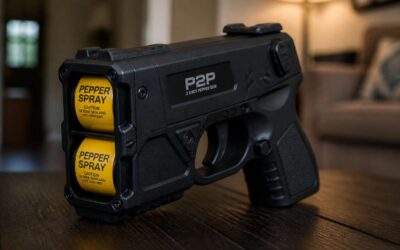
- Pepper spray is illegal, classified as a firearm under the Firearms Act 1968.
- Personal alarms are lawful.
- Everyday items, such as keys or a torch, are acceptable only if used in the moment.
The legal definition requires subjective honesty and objective proportionality. That distinction shapes what self defence can you carry in uk more than any product list.
What Counts as a Weapon Under UK Law
The law defines a weapon by intent, not appearance. The Prevention of Crime Act 1953 covers any article made, adapted, or intended to cause injury. A heavy torch, a ring of keys, or a glass bottle becomes an offensive weapon the moment you carry it for defence rather than utility.
Some objects are prohibited outright. Flick knives, telescopic truncheons, and knuckledusters carry automatic criminal liability. No justification exists for carrying them in public.
- Tactical pens marketed for self defence have been ruled offensive weapons in court
- Kubotans on keychains have led to convictions when carried deliberately
- Irritant sprays fall under firearms legislation
The distinction shapes what self defence can you carry in uk. Carry a torch for light and you stay within the law. Carry the same torch to strike an attacker, and you become the offender before the threat appears.
The Offensive Weapons Act and Its Implications
The Offensive Weapons Act 2019 changed the law on possession. It banned owning certain weapons even in private, closing loopholes that allowed collectors to hold them legally. Corrosive substances now face the same scrutiny as blades.
This legislation reshapes what self defence can you carry in uk. The Act targets specific categories: flick knives, gravity knives, knuckledusters, and zombie knives. You cannot order these online. You cannot have them delivered home. You cannot keep them in a drawer.
- Delivery of banned weapons to residential addresses is a criminal offence
- Private possession carries up to four years in prison
- Buyers must collect items in person and prove their age
The Act leaves little room for genuine ignorance. I have watched otherwise careful people assume a shop shelf means legal. A weapon found in your glovebox becomes a criminal matter immediately!
Where You Can Legally Carry a Self-Defence Item
Understanding UK Self-Defence Law Where You Can Legally Carry a Self-Defence Item
The reality of what self defence can you carry in uk often surprises visitors from South Africa. A pocketknife that seems harmless at home may draw police attention here. The law separates carrying an item on your person from keeping it in your home.
Consider the practical boundaries:
– A fixed blade over three inches is illegal to carry in public without good reason
– Folding knives with locking mechanisms face similar scrutiny
– Even a sharpened keychain tool can attract attention if an officer deems it offensive
The central question is intent. A chef transporting knives to work might offer a valid excuse. The same blades in a nightclub do not. Carrying any item with the primary purpose of harming someone changes the legal picture entirely. Public spaces demand caution. Private property offers more latitude, though not complete freedom.
Common Misconceptions About Self-Defence Items
Many South Africans assume a small pepper spray or tactical pen is a harmless accessory. I have watched visitors discover otherwise at airport security. The honest answer to what self defence can you carry in uk is blunt: almost nothing for personal protection. Pepper spray is classified as a firearm, and mere possession carries the same legal weight as carrying a loaded pistol.
Another misconception concerns folding knives. People believe that a non-locking blade under three inches is automatically safe. UK courts look at the carrier’s stated purpose. If an officer or judge decides the knife was carried for defence, the legal protection disappears.
- Everyday items carried with defensive intent become weapons in law.
- A kubotan or sharpened keychain tool faces the same scrutiny as a baton.
So what self defence can you carry in uk? In practice, very little. The law expects you to rely on reasonable force rather than any dedicated tool.
Everyday Items with Self-Defence Potential
Keychains and Torches: Tactical Flashlights
The question of what self defence can you carry in uk often surfaces when people confront the reality of walking alone at night. The answer is not found in martial arts bravado or hidden blades, but in the mundane objects we already carry daily. An umbrella, a rolled magazine, or a heavy set of keys can all serve as a physical deterrent, yet the most effective tools are those that create distance and visibility. This is where the distinction between intent and object becomes critical, as the law examines your purpose, not just the item itself.
Everyday items with self-defence potential are a study in perception. Keychains and torches, particularly tactical flashlights, offer a fascinating intersection of utility and preparedness. A tactical flashlight is not a weapon; it is a tool that can temporarily blind an assailant, allowing you a critical second to escape. Its legitimacy lies in its primary function, which is illuminating a dark path. When considering what self defence can you carry in uk, the practical value of a bright light cannot be overstated. The conversation around these tools is less about combat and more about awareness, giving you the chance to act before a situation escalates.
A high-lumen torch is effective because it disrupts an attacker’s ability to see, but its psychological impact is equally profound. The sudden burst of light creates confusion and hesitation, which are the first signs of a threat. You might carry a torch to find your keys in a dark car park, but its true worth emerges in those few seconds of uncertainty. The items you choose to carry should always have a dual purpose, ensuring that your intent remains oriented toward safety and avoidance.
– A solid metal torch can double as a striking tool, though its primary purpose remains illumination.
– A keychain whistle offers a way to attract attention without escalating violence.
– A heavy, reinforced umbrella can be used to maintain distance, yet it is first and foremost an accessory against the rain.
These objects exist in a legal grey area, but their presence in your pocket is a practical consideration, not a provocative one. When people ask what self defence can you carry in uk, they are really asking how to navigate a world that feels less safe. The answer lies in the deliberate choice of everyday items that offer options without crossing the line into aggression. You are not preparing for a fight; you are preparing for a moment, and that subtle shift in mindset is what makes all the difference.
Umbrellas, Walking Sticks, and Sturdy Bags
The umbrella remains a quintessential British companion. Its primary role, deflecting rain, is beyond reproach, yet its long handle and reinforced ribs offer an unobtrusive advantage. A walking stick serves similarly, providing balance on uneven paths while keeping a polite distance between you and any overzealous stranger.
- Solid hardwood handles on umbrellas offer more substance than collapsible plastic stems.
- Walking sticks with a curved crook serve a dual purpose beyond mere wrist support.
Everyday utility keeps both items on the right side of UK law. When pondering what self defence can you carry in uk, consider the sturdy bag. Swung deliberately, it creates the moment of separation needed to step away. The law examines intent, and your intent is simply to get home dry and unhurried.
Personal Alarms and Whistles
The personal alarm is a peculiar piece of kit. I have seen grown adults flinch when one discharges in a confined space. That is the desired effect! It weighs almost nothing, yet produces a piercing electronic shriek at around 120 decibels. The volume disorients an attacker and alerts anyone within earshot.
Whistles take a different approach. No batteries. No switches. The classic metal pea whistle carries a bright note through wind and rain. Referees and climbers trust them. The same logic applies to someone walking home after nightfall.
When asking what self defence can you carry in uk, these items sit comfortably within the law. Their function is noise, not harm. That distinction matters.
Pepper Spray: Illegal but Alternatives Exist
The question of what self defence can you carry in uk leads to a common frustration. Pepper spray, though legal in many countries, is a prohibited firearm under UK law. The canister sits in the same category as a handgun. No warning shot, no compromise.
This is where everyday items become interesting. A solid fountain pen, a heavy torch, a roll of coins in a sock. They exist for innocent purposes, so carrying them attracts no attention. The law concerns itself with intent, not potential.
- A padlock on a keychain adds weight to a swing without raising suspicion.
- A steel comb with a sharp spine fits the hand like a knuckle duster, yet lives as a grooming tool.
- A glass bottle filled with water becomes a credible deterrent when your path darkens.
None of these answers what self defence can you carry in uk with absolute certainty, because the law reads intent, not object. The only legal certainty is this: you may carry items whose purpose is innocent. The moment you weaponise them, you have broken the law.
Mobile Phones and Improvised Tools
Your mobile phone might be the most underrated self-defence tool you own. In a tight spot, it captures video, summons help, and its torch can disorient. The question of what self defence can you carry in uk rarely includes the device in your pocket, yet its defensive utility rests on intention. Pointing it to record is not threatening; it is evidence gathering.
Improvised tools work on the same principle. Consider alternatives that raise no eyebrows.
- A thick glass nail file
- A metal water bottle
- A folded newspaper
Each lives an innocent life. The moment you think of them as weapons, the law shifts. When strangers ask what self defence can you carry in uk, the honest answer remains: objects with innocent purpose. Your phone is the perfect example. Its primary function is communication, yet its defensive value lies in light, sound, and documentation.
Legal Self-Defence Products You Can Carry
Tactical Pens: Fact and Fiction
One object sits in a breast pocket, yet its legal status is far from settled. Tactical pens serve as writing instruments, but their hardened tips invite questions. In the UK, the law judges intent rather than design. Carry one for writing, and you are fine. Carry it as a defence tool, and you may cross into prohibited territory.
The fiction is that a tactical pen is a loophole. The fact is that possession becomes an offence if you intend to use it to injure. Police and prosecutors assess circumstances. A pen in a bag reads differently from one clutched in a fist. So, what self defence can you carry in uk depends on your reasoning.
Consider these points:
- Tactical pens are legal when used as pens.
- They become weapons if intended for self-defence.
- Reasonable force does not cover carrying a weapon.
The pen’s ambiguity makes it a poor choice.
Kubotans and Self-Defence Keyrings
I have watched security personnel ignore a kubotan on a keyring. I have also watched a police officer examine the same object with suspicion. Context changes everything.
A kubotan attached to your house keys is an everyday accessory. A kubotan gripped between knuckles, with its tip exposed, becomes something else. The law focuses on your intent at the moment of carrying.
Self-defence keyrings share this burden. Spiked edges and angular tips exist to injure. If that is their purpose for you, the courts take a dim view.
- Keys in hand, kubotan attached: lawful.
- Kubotan in a defensive grip with intent to strike: an offence.
- Keyring marketed for self-defence: legally risky to carry.
So what self defence can you carry in uk? I can answer from experience. Kubotans and self-defence keyrings are not automatically illegal. They become illegal when your purpose turns them into weapons. That purpose is what the police probe, not the product’s design.
High-Decibel Personal Safety Alarms
High-decibel personal safety alarms occupy a strange corner of UK law. They are not weapons. They emit noise, nothing more. That makes them one of the few items you can carry without a second thought. The question of what self defence can you carry in uk often has a complicated answer, but this one is simple.
I have tested models pushing 130 decibels. That volume does not just alert people nearby. It disorients an attacker. It buys you time.
- A personal alarm with a pin mechanism, which stops the sound when pulled.
- A compact alarm that clips to a bag or belt loop, always within reach.
- A unit with a strobe light, adding visual confusion to the noise.
The law cares about your purpose. An alarm exists to signal distress. That purpose is legitimate.
Reflective Safety Items with Dual Purpose
Reflective safety items offer a quiet kind of protection, one grounded not in force but in visibility. When the question of what self defence can you carry in uk arises, people often overlook gear that simply makes you harder to miss. High-visibility clothing and accessories alter the dynamics of a street encounter by removing the element of surprise.
An attacker relies on anonymity and the absence of witnesses. Reflective strips or bright panels on clothing force a confrontation into the open. They turn a dark, isolated street into a stage where your presence is announced. This is a deterrent that operates on pure optics.
Consider the practical forms this protection takes:
– Reflective armbands that slip over a coat sleeve, catching car headlights or street lamps.
– High-vis vests worn for a commute that double as a statement of constant observation.
– A bag with retroreflective piping that remains visible even when you are standing still.
The light that bounces back from these items destroys the cover of darkness. It also provides a crucial second of hesitation for any potential aggressor. This moment of adjustment, where they realise they are seen, is often enough to end the threat before it begins. This is a legal answer to what self defence can you carry in uk that requires no physical intervention at all.
Legal Pocket Tools and Multitools
In a moment of crisis, your grip strength can drop by up to 30 per cent. What self defence can you carry in uk that remains effective when your hands are shaking? Pocket tools that serve a dual purpose offer the only realistic answer. They exist in your pocket for mundane tasks, yet their weight and shape change the calculus of a close encounter.
The legal boundary here is intent. A multitool with a blade is a utility item if it is carried for repairs or daily use. The moment its sole purpose becomes defence, it crosses into the territory of an offensive weapon. This is not a grey area; it is a clear line that prosecutors look for first.
A heavy-duty multitool offers brass knuckle level impact potential without the legal baggage. The pliers, locked open, create a striking surface. The screwdriver bit can create distance. A solid steel torch, already covered elsewhere, works but a multitool adds versatility.
Consider the options that carry no legal risk:
– A Swiss Army knife with a locking main blade for everyday practicality.
– A leatherman style tool with a seatbelt cutter for emergencies.
– A small, fixed blade screwdriver set that offers a point of focus.
The element of surprise remains your greatest ally. An attacker profiles a victim by perceived passivity. Someone who reaches into a pocket and produces a tool, rather than a weapon, disrupts that profile. This disruption, this brief moment of confusion, is where a window to escape opens. The law allows you to carry tools; it does not allow you to carry weapons. Understanding that difference is the only true self defence you can carry in uk.
The physical reality is that any hard, dense object in your hand changes the dynamic. A solid metal pen, a heavy flashlight, a multitool. The law does not require you to be unarmed in the face of a threat, merely to choose your tools wisely. The best products are the ones you actually use daily, so their presence in your pocket never raises suspicion. This is the quiet strategy: carry what is useful, and its utility becomes your shield.
Portable Door Locks and Wedge Alarms
Portable door locks and wedge alarms often get overlooked in any conversation about what self defence can you carry in uk. They do not look like weapons. They are security devices, designed for hotels, rental flats, and shared housing. That distinction matters because the law treats them as home safety items, not offensive tools.
A wedge alarm sits under the door and shrieks the moment pressure is applied from outside. A portable door lock replaces the existing latch mechanism, effectively deadbolting a door from the inside without leaving permanent marks. Both options work with zero physical strength. Your hands might be shaking after a long journey or a stressful day, yet the product still functions perfectly.
In a confined space, your best defence is the barrier between you and the threat. That barrier buys time. It lets you call for help, grab a multitool, or simply prepare to flee. For anyone asking what self defence can you carry in uk that actually fits inside a handbag, these items are the quiet, reliable answer.
Alternatives to Physical Self-Defence Items
Self-Defence Training and Situational Awareness
The best answer to what self defence can you carry in uk is not an object at all. A structured course in Krav Maga or reality-based defensive tactics teaches you to react under stress. Your body itself is the tool, always present, never subject to search.
Situational awareness adds another layer. Observing entrances, noticing loiterers, and heeding your instinct keeps you clear of danger before it starts. These skills require no permit and raise no legal questions.
- Enrol in a certified self-defence course
- Practise scanning your surroundings daily
- Learn verbal de-escalation tactics
In South Africa, where the law scrutinises carried objects, these non-physical options remain entirely above board.
Body Language and Verbal De-escalation
A staggering 90% of confrontations are won or lost before a single punch is thrown. This is where the true answer to what self defence can you carry in uk becomes a matter of presence, not possession.
Your posture is a statement. Stand tall, with your shoulders back and your chin level. This does not mean puffing your chest out like a peacock, it means occupying your space with quiet confidence. A would-be attacker scans for easy targets, and someone who walks with deliberate, steady movement is often crossed off that list. Keep your hands free and visible, preferably slightly raised, and maintain a relaxed but ready stance.
Your voice is your first line of defence. Command presence with a firm, calm tone. Use short, clear phrases like “Stay back”, or “No”. This projects certainty and gives you a moment to assess the situation. The goal is to de-escalate, not to win an argument.
Here is what strong, non-verbal communication looks like:
– Maintaining eye contact without staring aggressively
– Creating a protective angle with your body
– Placing distance between yourself and the other person
These techniques require no licence and no equipment. When you ask what self defence can you carry in uk, remember that your demeanour is the one tool that can walk you out of a situation unharmed. It is a skill refined through practice, not purchased in a shop.
Personal Safety Apps and GPS Trackers
When the question of what self defence can you carry in uk shifts from physical tools to digital solutions, a new world opens up. Your smartphone, often dismissed as a distraction, becomes a sophisticated safety device. Personal safety apps transform it into a beacon of distress, sending your live location to chosen contacts with a single, deliberate press. This is not about replacing awareness, it is about extending your reach beyond arm’s length.
Many of these applications offer a simulated siren, a sound so piercing it disorients an assailant and alerts those nearby. The true value lies in the automatic transmission of your coordinates, creating a digital trail where none existed before. For those who walk or commute alone, a GPS tracker, whether a standalone device or a feature within an app, provides a quiet reassurance. It allows a trusted person to monitor your journey in real time, ensuring that help is always a breath away. These tools are legal, lightweight, and always with you, making them a practical answer to what self defence can you carry in uk.
Consider the layers of protection a phone can offer:
– Immediate connection to emergency services with a discreet alert
– Live location sharing for friends or family
– Voice recording to capture evidence without holding a device
– A high-decibel alarm function that requires no data signal
These are not abstract concepts. They are practical applications of technology, turning a common object into a lifeline. While a keychain or a torch serves a purpose, the app on your screen can do things no fixed tool can. It can document an incident, share your status, and bring help to your exact position, all without you needing to close the distance. When you consider what self defence can you carry in uk, remember that the most powerful tool might already be in your pocket, charged and ready.
Where to Keep Your Self-Defence Items
In Your Bag: Best Practices
Your bag holds tools for survival, but their position determines how quickly you reach them. When thinking about what self defence can you carry in uk, the answer often depends on accessibility. A keychain alarm buried under loose receipts becomes useless in a crisis! I have watched people rummage for ten seconds while a threat looms. That hesitation costs survival.
Place items based on frequency and need. High-use safety tools belong in outer pockets with smooth zippers. Items for specific scenarios, like a torch, sit deeper but still within reach. Avoid the bottom of the main compartment where everything compresses them.
Consider this arrangement for your primary bag:
- Personal alarm in the front zip pocket, clipped to a loop.
- Torch in a side pocket, oriented for an immediate grip.
- Multitool in the inner divider, separated from sharp objects.
On Your Person: Accessible Placement
Reach determines whether a legal item ever becomes a defence. Conversations about what self defence can you carry in uk often focus on legality alone, yet a torch buried in a zipped compartment offers no help when a threat closes distance. I keep my personal alarm in the same front pocket where my phone normally sits. Muscle memory handles the rest.
Your body presents several consistent positions for everyday carry:
- Front trouser pockets, cleared of coins and keys
- A waistband clip on the hip of your non-dominant side
- An outer jacket pocket with a smooth, two-way zipper
- A slim pouch on a crossbody strap at chest height
Clothing drives every decision. Jeans with shallow pockets need different arrangements than cargo trousers. Office attire limits belt space. The rule stays simple: an item belongs where your hand naturally falls, not where the packaging suggests.
At Home: Legal Considerations for Batons and Martial Arts Weapons
At home, the question of what self defence can you carry in uk shifts from public carry to private possession. A baton placed beside the bed remains an offensive weapon under English law. Courts do not treat a domestic threshold as a licence for prohibited items.
- Flick knives and gravity knives
- Nunchaku and throwing stars
- Batons and truncheons
Martial arts weapons with a genuine training purpose, such as a wooden practice staff, occupy a legal grey zone. Design and intent decide the outcome. A weighted baton has no sporting function. A staff does. A receipt or club membership document can demonstrate that lawful purpose.
In the Car: Self-Defence Items in a Vehicle
Your vehicle does not become a private fortress the moment you close the door. A glovebox is still public space in the eyes of the law. If a police officer discovers a baton or a flick knife within arm’s reach, you face the same charges as if you carried it on the pavement. I have seen drivers assume otherwise, only to learn the distinction during a roadside stop. So the question of what self defence can you carry in uk extends directly to your car.
The boot offers a different legal posture. Items stored there, sealed and inaccessible from the cabin, carry less risk. Consider where you place things:
- Centre console and door pockets are high risk areas.
- The boot, locked and separate, is the safest storage location.
- Any passenger within reach of an item changes the legal picture.
A personal alarm or a torch on the passenger seat is lawful. A kubotan in the same spot creates a different conversation.
0 Comments